In Miami, making a home a harder target starts with closing the vulnerabilities burglars look for first: easy access, weak entry points and – of course – signs that no one is around. Developing good habits (such as locking everything, not advertising absences and trimming landscapes), improving the performance of doors and windows, reinforcing exposed openings and choosing systems that act before an intruder gets inside all follow the same logic.
For residential spaces featuring large, glazed openings, bright interiors and a direct connection between indoor and outdoor living, which are quite typical in many Florida homes, security cannot be an afterthought. It needs to robustly protect private spaces without any repercussion in terms of light, comfort or overall design.
The goal is not a property that looks fortified or closed off, but that takes more effort, more time and more risk to break into – often enough to make it a less appealing target altogether.
Why are some homes in Miami easier targets than others?

Some homes in Miami are more exposed to burglars simply because their entry points are easier to force. Standard doors, lightly protected windows, secondary access points and poorly reinforced frames can make a property far more vulnerable than it looks from the outside and, in many cases, the weakest point only becomes clear under stress.
Open layouts, large glass surfaces and multiple indoor-outdoor connections add up to more exposure. Sliding openings, side entrances, garage access and standard window systems can all become weak spots if they are not built for resistance (according to ProTech Security, the five most common home entry points include front and back doors, sliding glass doors and windows). Appearance plays a role too: homes that look unoccupied, poorly lit or easy to approach signal low risk.
For homeowners evaluating security doors in Miami or looking into secure windows in Miami, the issue shouldn’t just be visibility or style, but how each opening actually performs when someone tries to force entry. Overall, security works better as a system than as a single product: doors, windows, frames, locks, lighting and daily habits all contribute to how well a home holds up against an attempt, and burglar-resistant doors and reinforced window systems reduce opportunities at the points where a break-in is most likely to start.
What does it mean to make a home a “hard target”?
It has to be stressed that a “hard target” is not a home that looks extreme or inaccessible. But although complete inaccessibility is almost impossible, intruders tend to be discouraged when it takes more time, effort and risk to break into a house. Thus, the goal to pursue is to reduce the chances of quick access at the points a burglar is most likely to try first.
Visible deterrence still matters. Good lighting, clear sightlines and a house that looks occupied all reduce exposure. On the contrary, a home that appears easy to approach and unattended is a lower-risk opportunity.
Still, deterrence alone is rarely enough. Physical resistance at doors and windows is what actually slows a forced entry attempt, before alarm systems or any other response can engage. A home thus becomes a hard target when the openings themselves perform, not just when additional layers are placed around them.
Start with the most vulnerable points: doors and windows
Reducing forced-entry risk starts with a clear assessment: which openings would a burglar try first and how much resistance do they actually offer?
Why standard doors may not be enough
A standard residential door is designed for daily use, insulation and visual fit with the home. Under forced-entry conditions – which involve pressure on the lock area, the frame or the structure itself — that is often not enough.
Burglar-resistant doors are built differently. As inherently reinforced systems, they are engineered to slow break-in attempts and make forced entry more difficult, more noisy and more visible. In a residential project, that means evaluating how the full opening performs: frame, hardware, locking system and construction.
Why windows are often underestimated
Windows are primarily thought of as sources of light, views and architectural openness. From a security standpoint, they are also access points, particularly in homes with large glazed areas, sliding systems and strong indoor-outdoor continuity.
In Miami, where contemporary residential design favors brightness and expansive glazing, burglar-resistant windows matter because they enhance security without forcing the architecture to sacrifice transparency or visual lightness.
Why protection has to be integrated, rather than added later
The most effective security is built into the opening from the start, rather than added at the end of the project. When protection is part of the system itself, frame, glass, hardware and opening type work together as a coherent unit.
Beyond resistance, integration preserves what matters in a high-end home: clean lines, comfort, natural light and architectural consistency. Corrective additions made after a design is already defined rarely achieve the same result.
In premium properties, security performs best when it is part of the architecture rather than a visible layer on top.
What to look for in burglar-resistant doors
Choosing the right burglar-resistant doors means looking beyond the surface and understanding how the entire opening performs under stress. Structure comes first: the door must resist forced-entry attempts without turning the frame or surrounding components into the weak point.
Locking system and hardware are just as critical. A door is only as strong as the mechanism keeping it shut, so locks, hinges and other components need to be assessed as part of the same system. The frame follows the same logic: even a reinforced door leaf can be bypassed if the frame around it does not match its resistance level.
Once again, the best security doors in Miami are to be evaluated as complete systems: structure, frame, locking points, hardware and installation all shape the final level of protection. Certified resistance ratings are also essential as they provide a concrete benchmark for objectively comparing solutions.
Finally, let’s talk about the look & feel of this architectural element. In residential projects, performance is only part of the equation: finishes, proportions, materials and customization options all matter, especially in premium properties where protection needs to coexist with a defined architectural vision.
What to look for in burglar-resistant windows for Miami homes
When evaluating burglar-resistant windows, frame and glazing need to be assessed together. Just like in security doors, resistance is a product of how all components work as a unit: a reinforced frame with inadequate glazing or quality glass in a weak frame, both limit the overall result.
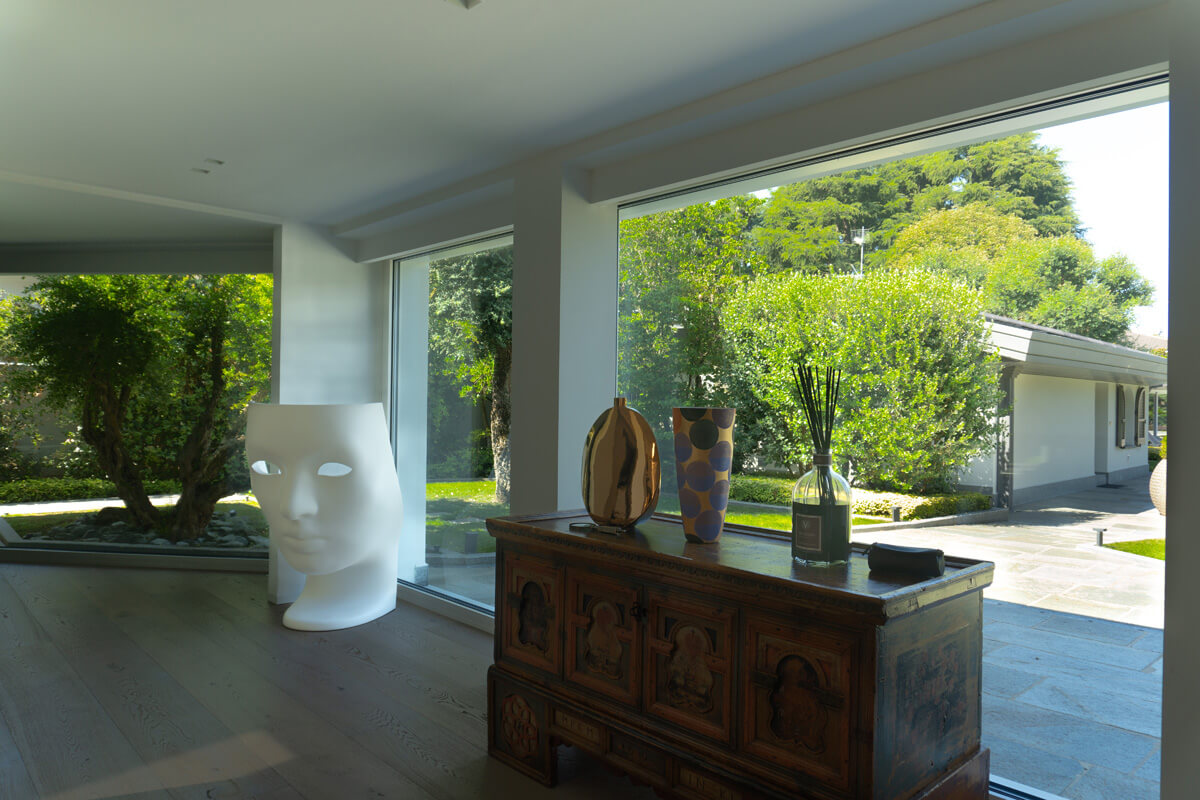
In Miami homes where large openings and natural light define the architecture, expansive glazing adds value but also raises the stakes. Window systems need to be chosen with that in mind: security that supports the design.
Well-designed window systems do more than resist intrusion: they contribute to thermal performance, acoustic comfort and everyday indoor livability, all relevant factors in high-end residential projects. For homeowners looking into secure windows in Miami, the right solution hence combines protection, comfort and long-term architectural quality.
In luxury homes, secure windows need to feel proportionate – not bulky, not visually heavy, not disconnected from the rest of the property. The best burglar-resistant windows maintain resistance while keeping clean lines, natural light and architectural balance intact.
Can security and design coexist in high-end Miami homes?
Security and design can definitely coexist in high-end Miami homes when security is treated as part of the architecture from the start, and it’s not a “correction” applied afterward.
Transparency, brightness, clean lines and a strong indoor-outdoor relationship define many high-end Miami homes. Large openings and visual continuity are central to the identity of these properties, and security systems need to work within that same logic.
Oversized, overly technical or visually disconnected security products weaken the overall result. The right approach is to choose systems that offer strong protection while matching the space’s materials, proportions and architectural language.
In villas, premium residences, lofts and custom renovations, every detail shapes the final result. Security that reads as integrated — rather than grafted on — is what makes the difference in homes where design and performance carry equal weight.
When bulletproof doors for home use may enter the conversation
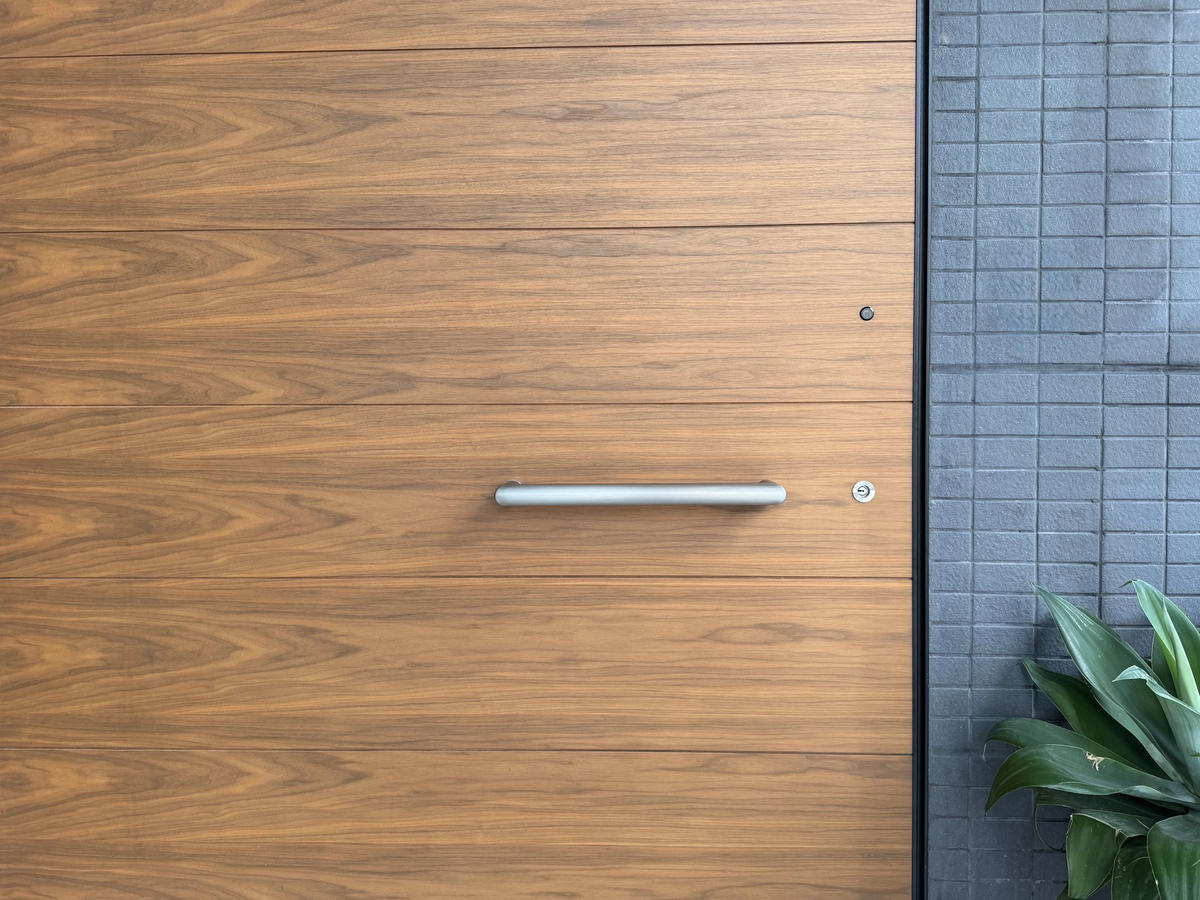
Most residential projects do not require ballistic protection, and well-specified anti-burglary systems effectively cover the main access points in the majority of homes.
Some homeowners, however, face security requirements that go beyond standard anti-intrusion performance. In those situations, bulletproof doors for the home or bulletproof front doors become relevant as more advanced residential solutions.
These belong to a specialized segment and need to be evaluated on a case-by-case basis — taking into account the specific security brief, the type of property and the required protection level. In short, there are no “default choices” for every home.
Even at this level, design integration remains a requirement. In high-end residential projects, ballistic-resistant doors and windows should be indistinguishable, in proportion and finish, from the rest of the architecture.
Why GINKO is a strong fit for security doors and windows in Miami
GINKO brings together advanced protection, architectural quality and over thirty years of experience in the security door and window sector. The company’s excellence-driven Made in Italy approach treats each opening as part of the home’s architecture rather than as a standalone technical element, and this is a distinction that matters in Miami’s residential market.
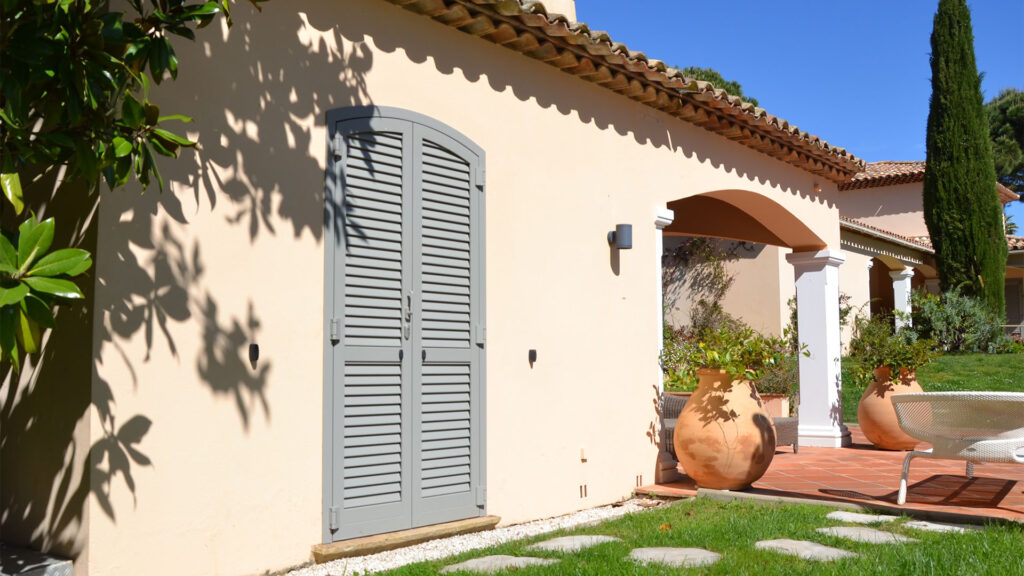
In properties where light, openness and material quality define the design, GINKO systems deliver top-notch passive security without sacrificing visual balance or clean lines. Finishes, configurations and opening types can be tailored to the project, aligning protection with the residence’s character.
Beyond security, GINKO systems support thermal comfort, acoustic performance and everyday livability – crucial qualities in high-end homes where protection and residential comfort are not in opposition.
The brand’s collections cover a wide range of architectural and security needs. They include solid security doors such as INVISIO, INVISIO Plus and INVISIO Pivot, glazed security doors such as INVISIO Plus Glass and INVISIO Pivot Glass, burglar-resistant windows such as IKONA, sliding systems such as IKONA Slide, security shutters such as EVA and ballistic-resistant options including ATENA 110 Bullet, INVISIO Bullet and IKONA Bullet. Together, these systems allow homeowners, architects and builders to evaluate different levels of protection without giving up design consistency or technical quality.
Research, testing, patented solutions and certified performance complete the picture. For high-end homes, the value of a security system often depends not only on how strongly it protects, but on how well it integrates with the architecture: that balance is one of the main reasons GINKO can be a compelling choice for security doors and windows in Miami.